
Adaptive Lighting
When to Use It
Adaptive lighting setting. What are the conditions under which this feature is best suited?
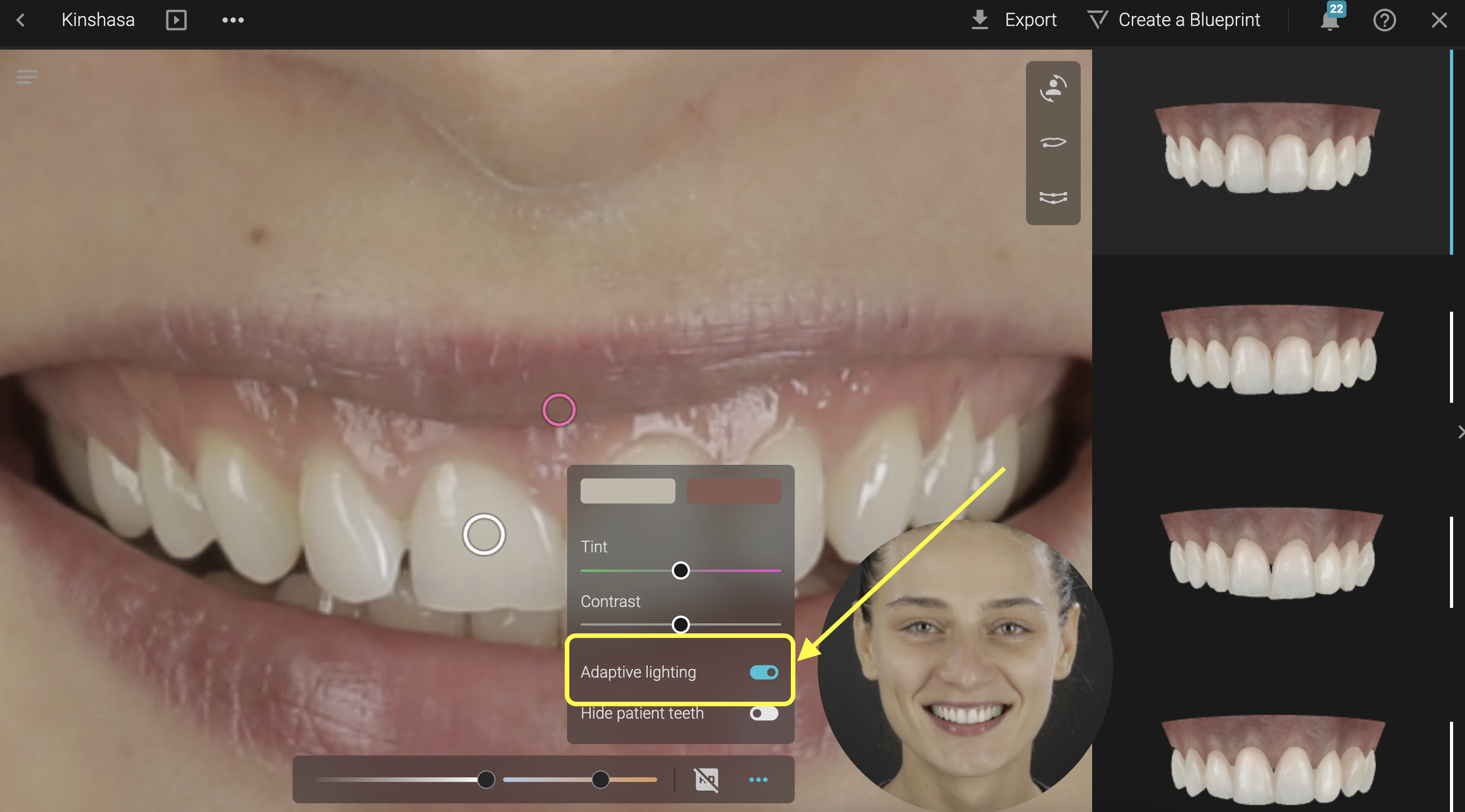
Best suited for:
- Images that are slightly underexposed (but still retain visible tooth detail).
- Photos with a blue or yellow color cast that need neutralization.
- Cases where the color picker is placed on a healthy anterior tooth (central/lateral incisor or canine).
In these conditions, Adaptive Lighting improves brightness balance and color accuracy without distorting tooth shade.
Not recommended when:
- The color picker is placed on a very dark tooth.
- The picker is placed on a missing tooth area.
- The picker is placed in the buccal corridors or shadowed zones.
- The image is severely underexposed or overexposed.
- The reference tooth is discolored, restored, or compromised.
In such cases, Adaptive Lighting may overcompensate and cause overexposure.
Recommendation:
For optimal results, use well-lit frontal images and position the color picker on a healthy anterior tooth with natural shade and clear visibility.